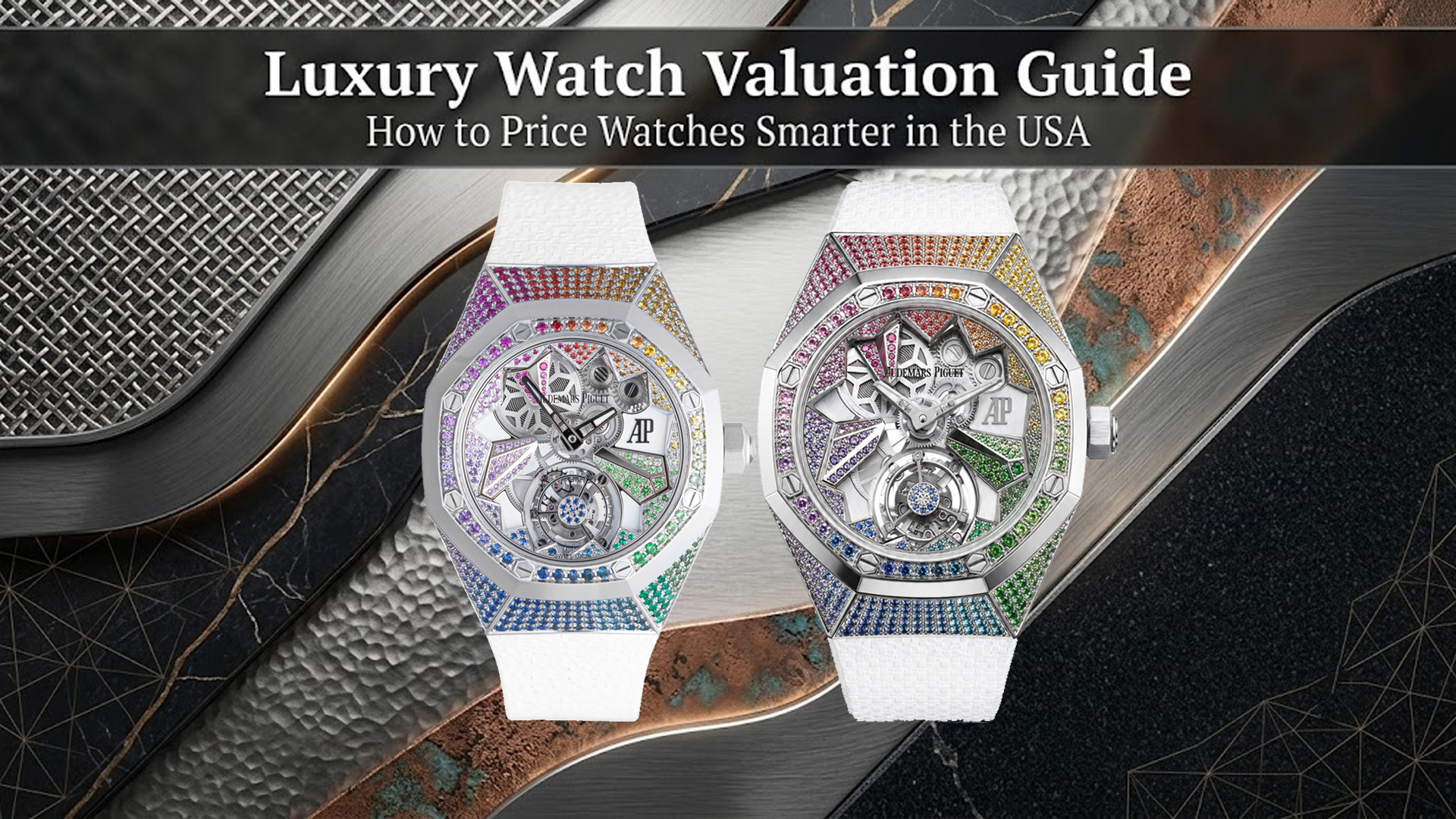
💸⌚ Want a Better Offer for Your Watch? Most Sellers Do Not Lose Money Because of the Brand — They Lose It Because They Never Valued It Properly
Luxury watch valuation in the USA is one of the most important parts of the selling process, yet it is also one of the most misunderstood. Many owners assume valuation is simple. They look at one or two listings, compare the brand name, and decide they already know what the watch should bring. In reality, a serious pre-owned luxury watch valuation depends on a much more detailed set of factors. The exact reference, the condition, the presence of box and papers, service history, model desirability, originality, and the selling route all shape the real value of the watch.
That is why a smart seller does not treat valuation like a rough guess. A good valuation protects you from both sides of the mistake. It stops you from pricing too high and losing serious buyers, and it also stops you from accepting too little simply because you never understood what the watch actually represented in the current market. In a premium category, pricing confidence should come from structure, not emotion.
A strong luxury watch valuation guide in the USA should help sellers think like professionals before the first offer arrives. It should explain why two watches from the same brand can perform very differently, why the difference between a full set and a watch only listing matters, why a well-presented watch often commands a better response, and why the value of the watch itself is not always the same thing as the value of the transaction route you choose.
The Platinum Times site itself reinforces this structured view of watch valuation. Its live sell or trade luxury watches page asks sellers for the exact brand, model, reference model, condition, papers, box, proof of purchase, offer amount, and images, which reflects the same practical valuation factors that serious buyers and professional sellers use to assess a watch properly.
Why Luxury Watch Valuation Is Never Just About the Brand Name
Brand matters, but brand alone does not create a complete valuation. A seller may own a Rolex, Patek Philippe, Audemars Piguet, or Hublot, but the value of that watch is still shaped by reference-specific demand, current market appetite, condition, and completeness. That is why blanket pricing logic almost always fails. A buyer does not purchase “a Rolex” in the abstract. They buy a specific reference, in a specific condition, with a specific ownership story.
This becomes even more important in the U.S. market, where buyers often compare multiple sources quickly. Some compare category pages. Some compare model families. Some only look at highly specific references. A seller who understands this is already in a stronger position because they know valuation is not a generic exercise. It is a model-level exercise shaped by how buyers actually behave.
The live Platinum Times pre-owned luxury watches section shows how broad the category is, with active brand navigation across names like Rolex, Patek Philippe, Audemars Piguet, Cartier, Hublot, Richard Mille, Vacheron Constantin, Franck Muller, IWC, and more. That range alone is a reminder that “luxury watch value” is not one market. It is many overlapping micro-markets moving at once.
What Actually Drives Luxury Watch Value?
The strongest valuations usually come from understanding the factors below together, not one at a time.
| Valuation Factor | Why It Matters | How It Changes the Result |
| Exact reference | Different references within the same brand can trade very differently. | A highly desirable reference may command far stronger attention than a less in-demand sibling model. |
| Condition | Visible wear, polish history, bracelet stretch, strap condition, and case sharpness all influence trust. | A better-preserved watch usually supports stronger buyer confidence and cleaner negotiations. |
| Box and papers | Completeness improves provenance and reduces buyer hesitation. | A full set often receives stronger interest than a watch only example. |
| Service history | Documented service can reduce perceived risk. | A well-documented watch can feel easier to buy and easier to justify at a premium number. |
| Brand and model demand | Some families are searched, compared, and purchased more aggressively than others. | Buyer demand shapes both speed and pricing strength. |
| Sales route | A trade-in, outright sale, consignment, or direct private sale all frame value differently. | The watch’s value may feel different depending on how the seller wants to exit it. |
In other words, the right number is usually built, not guessed. That is why serious sellers think about market value as a layered decision rather than a simple price tag.
How Brand and Model Family Shape a Pre-Owned Luxury Watch Valuation
Different brands carry different buyer expectations. A Rolex valuation is often driven by reference familiarity, condition, and set completeness. A Patek Philippe valuation may involve even more scrutiny around provenance, originality, and model desirability. An Audemars Piguet valuation often becomes more sensitive to finishing, case integrity, and bracelet condition. A Hublot valuation may depend more heavily on design appeal, model family, and how strongly the watch fits current buyer taste.
That is why sellers should always look beyond the brand headline and study the watch in its own family. The live category pages for the Rolex collection, Patek Philippe collection, Audemars Piguet collection, and Hublot collection naturally support this kind of model-family thinking because they help sellers compare how brands are positioned inside the broader market.
Even within those families, valuation can vary sharply. A cleaner, better-documented watch can outperform a more famous model that is poorly presented. This is why serious pricing is not just about prestige. It is about credibility.
Why Condition Carries More Financial Weight Than Most Sellers Expect
Condition is one of the biggest reasons sellers misjudge their own watch. Many owners look at a watch they have worn for years and still see it emotionally rather than objectively. Buyers do the opposite. They notice bracelet wear, clasp marks, soft edges, polish history, dial consistency, crystal wear, and overall presentation almost immediately.
A watch does not need to be perfect to be valuable. That is not the point. The point is that valuation only works when condition is described honestly. An accurately graded watch protects trust. An over-described watch creates doubt, and doubt usually lowers real buyer conviction.
That is especially true with premium model pages where live listings already signal the market’s expectation of structure and detail. For example, the active Rolex Datejust page and the active Patek Philippe Nautilus page both show buyer-facing fields such as condition, papers, box, and reference details, which reinforces how much these factors matter in real-world valuation.
The Real Difference Between Full Set and Watch Only
One of the most practical valuation gaps in the luxury watch market is the difference between a full set and a watch only listing. A full set usually means the watch includes the original box, papers, booklets, and often extra links or accessories. A watch only listing means some or most of that support material is missing.
That difference matters because buyers are not only buying the object. They are buying confidence around the object. A complete package usually feels easier to trust, easier to verify, and easier to resell later. That does not mean a watch without papers cannot perform well. It absolutely can. But it usually has less room for pricing ambition because the buyer is taking on more uncertainty.
For U.S. sellers, this becomes especially important when comparing offers. A seller who ignores set completeness often assumes the market is undervaluing the watch, when in reality the market may simply be pricing the missing confidence correctly.
Step-by-Step: How to Build a Smarter Luxury Watch Valuation
- Start with the exact reference
Never begin with the brand name alone. Start with the exact model and reference. That one detail immediately narrows the comparison set and gives your valuation a real foundation.
- Grade the condition honestly
Look at the case, bezel, bracelet or strap, clasp, crystal, and dial. Note whether the watch appears polished, whether there is visible wear, and whether the overall presentation still feels strong. A better valuation begins with better honesty.
- Gather all box and papers
Before discussing value with anyone, collect the original box, warranty card, service invoices, manuals, extra links, and proof of purchase if available. These items are part of the value story.
- Review service history
A recent documented service can strengthen a watch’s valuation because it reduces buyer uncertainty. If there is no service history, that should be understood as part of the risk profile, not hidden behind optimistic language.
- Compare against relevant model-level examples
Look at watches that are actually comparable in brand, reference, completeness, and presentation quality. A generic category comparison is helpful, but model-specific context is usually where the real valuation clarity appears.
- Decide which exit route matters most
A seller pursuing a trade-in, a consignment path, or an outright sale may see the watch differently because the goal of the transaction changes the logic of the valuation. The “best” number on paper is not always the best decision in real life.
- Set two numbers, not one
Professional sellers usually think in ranges. There is the ideal asking value and there is the realistic acceptance level. That approach protects you from emotional decision-making and makes negotiation cleaner.
Why the Same Watch Can Feel Differently Valued in Different Selling Routes
This is where many owners get frustrated. They think the watch should have one exact value at all times. In practice, value often shifts depending on the transaction path. A trade-in may emphasize convenience. A consignment strategy may emphasize stronger exposure and better retail positioning. An outright sale may emphasize liquidity and clean exit.
That does not mean the watch is being “priced wrong” every time the number changes. It means the transaction logic has changed. Sellers who understand this avoid one of the biggest emotional traps in watch valuation: assuming every number should look the same no matter what the exit strategy is.
The Platinum Times structure makes this practical distinction visible because its live sell or trade route combines both Trade and Sell paths in one process, which reflects how different seller goals can shape how a watch is evaluated before the transaction moves forward.
Using Live Model Examples to Think More Clearly About Watch Valuation
Sometimes the easiest way to understand valuation is to compare how different watches sit in the market. A live Rolex Datejust presents a very different valuation profile from a live Patek Philippe Nautilus. An active Audemars Piguet Royal Oak creates different buyer expectations from a live Hublot Big Bang. The important point is not the headline difference alone. It is the structure behind the difference: model family, condition, documentation, category demand, and buyer type.
This is exactly why sellers should be careful with broad assumptions. Brand prestige helps, but proper valuation only becomes sharp when the watch is studied at the model level and in the right sales context.
Mistakes Sellers Make When Trying to Estimate Market Value
- Starting with the brand instead of the reference
Fix: Always identify the exact reference before comparing price expectations. - Grading condition emotionally
Fix: Assess the watch like a buyer would, not like an owner attached to it. - Ignoring missing accessories
Fix: Let box and papers influence the number honestly. - Using random listings as proof of value
Fix: Compare only against relevant model-level examples with similar completeness and condition. - Assuming one number fits every sale route
Fix: Understand that trade-in, consignment, and outright sale can frame value differently. - Pricing only from hope
Fix: Build a valuation range, not just a dream number. - Not organizing the supporting story
Fix: Gather photos, documentation, and service history before discussing value with anyone.
Why Good Luxury Watch Valuation Creates Better Selling Results
When sellers understand value properly, they negotiate better, choose better routes, and create better buyer confidence. A good valuation reduces confusion because it gives structure to the whole process. It tells you whether your watch is best suited for a faster exit, a more patient sale, or a stronger trade-based move. It also helps you avoid the emotional swings that happen when offers arrive and you have no real framework to judge them.
That is one of the reasons the best sellers rarely sound desperate. They sound calm. They know the watch, they know its strengths, and they know the limits of its current position. That calmness often comes from preparation, and preparation starts with valuation.
Final Thoughts on Pricing Before You Sell
A strong luxury watch valuation guide in the USA should leave you with one clear conclusion: the right number is not something you “feel.” It is something you build through reference accuracy, honest condition analysis, documentation review, model-level comparison, and a realistic understanding of how you actually want to exit the watch.
For sellers who want the cleanest internal next steps, the most relevant routes are the broad pre-owned luxury watches collection, the structured sell or trade luxury watches page, and the major category paths such as the Rolex collection, Patek Philippe collection, Audemars Piguet collection, and Hublot collection. For live model-specific comparison, the active Rolex Datejust, Patek Philippe Nautilus, Audemars Piguet Royal Oak, and Hublot Big Bang pages all provide useful internal reference points for how different valuation tiers and buyer expectations appear in a live environment.
Leave a Reply