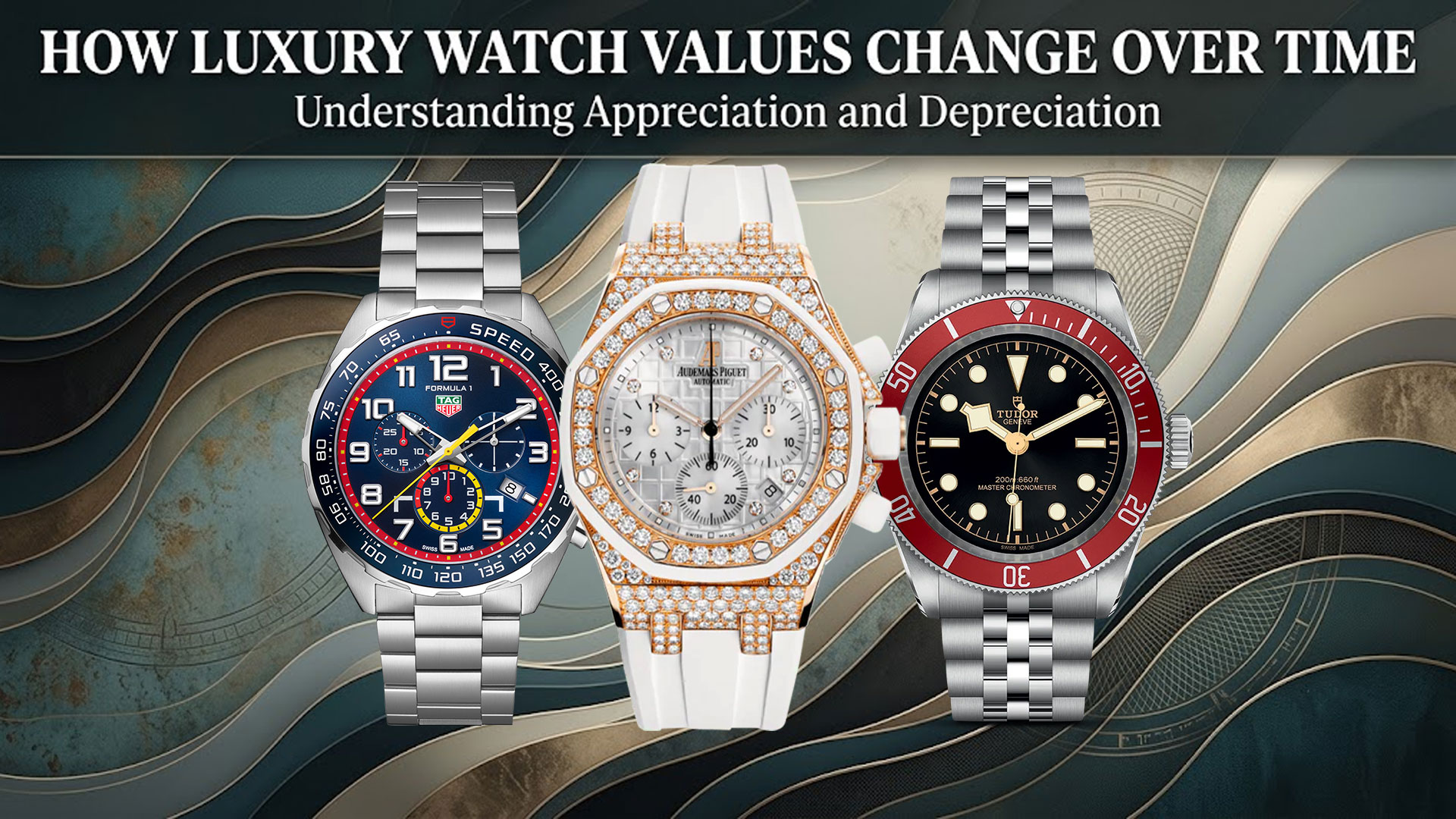
How Luxury Watch Values Change Over Time: Understanding Appreciation and Depreciation
Luxury watches have long been admired for their craftsmanship, history, and emotional significance. For many collectors and buyers in the United States, purchasing a premium timepiece is not only about style but also about understanding how ownership may evolve over the years.
One of the most common questions buyers ask is whether luxury watches increase in value. The answer is more complex than a simple yes or no. Some watches maintain strong demand for decades, while others may experience depreciation before eventually stabilizing.
⌚📈 Understanding Why Watch Values Change Over Time
The luxury watch market behaves differently from many other consumer products. Unlike electronics, which typically lose value quickly, premium watches from respected manufacturers often maintain demand because of craftsmanship, heritage, and collectability.
However, not every watch follows the same path.
Expert Insight: Experienced collectors rarely buy a watch purely for financial reasons. Instead, they focus on craftsmanship, enjoyment, and long-term desirability.
Appreciation vs. Depreciation: What Do They Mean?
Appreciation
Luxury watch appreciation occurs when market demand causes a watch to become more valuable over time.
Depreciation
Luxury watch depreciation occurs when a watch loses value after purchase, which is common with many consumer products and some luxury watches.
Neither outcome is guaranteed, and market conditions can change unexpectedly.
Factors That Influence Watch Values
1. Brand Reputation
Strong brands often attract long-term collector confidence.
Examples include:
2. Production Numbers
Limited production often creates stronger demand among collectors.
3. Condition
Well-preserved watches generally attract more attention than heavily worn examples.
4. Original Components
Original dials, bracelets, and parts often increase buyer confidence.
5. Box and Papers
Complete sets help document ownership history and authenticity.
6. Market Trends
Consumer preferences and collector interest evolve over time.
Do New Watches Depreciate?
Many luxury watches experience some degree of depreciation after initial purchase. This is normal and does not necessarily indicate poor quality.
Several factors contribute to early depreciation:
- Market supply
- Retail pricing
- Model popularity
- Production volume
Why Some Watches Appreciate
Historically, certain watches have maintained exceptionally strong collector demand.
Common characteristics include:
- Limited availability
- Strong brand heritage
- Discontinued references
- High collector interest
- Iconic design
Collector Observation: Scarcity alone does not create value. A watch also needs long-term desirability and sustained interest from buyers.
The Role of Collector Psychology
The luxury watch market is driven by people. Emotions, nostalgia, historical significance, and cultural influence all contribute to demand.
Collectors often pursue watches because of:
- Family memories
- Personal milestones
- Brand heritage
- Design appreciation
- Historical significance
Which Brands Have Historically Demonstrated Strong Demand?
Rolex
Rolex remains one of the most recognizable names in luxury watches.
Patek Philippe
Patek Philippe is respected for traditional Swiss craftsmanship and long-term ownership culture.
Audemars Piguet
The Royal Oak collection transformed luxury sports watches.
Richard Mille
Limited production and modern engineering contribute to strong enthusiast interest.
Omega
Omega combines history with everyday practicality.
Independent Watchmakers and Long-Term Interest
Many experienced collectors also appreciate independent manufacturers such as:
Why Documentation Matters
Collectors often value:
- Original box
- Warranty cards
- Manuals
- Receipts
- Service records
Buyers can also review the guide on Luxury Watch Authentication Checklist.
Common Mistakes Buyers Make
- Buying solely because of hype.
- Ignoring condition.
- Assuming appreciation is guaranteed.
- Overlooking service history.
- Focusing only on short-term gains.
Should You Buy Watches as Investments?
Luxury watches should primarily be purchased because you enjoy them. Any future value performance should be viewed as secondary rather than guaranteed.
The best ownership experiences usually come from combining passion with informed decision-making.
Buying and Selling Work Together
Understanding value changes also helps owners make smarter future decisions.
Collectors considering future upgrades can review the Sell & Trade page or browse the complete watch collection.
Frequently Asked Questions
Do luxury watches always appreciate?
No. Appreciation is never guaranteed, and many watches experience depreciation.
Why do some watches hold value better than others?
Brand reputation, rarity, collector demand, and condition all influence long-term value.
Do box and papers matter?
Yes. Documentation often improves buyer confidence and resale discussions.
Should I buy a watch as an investment?
Luxury watches should first be purchased for enjoyment and personal satisfaction.
Can pre-owned watches maintain value?
Yes. Many collectors actively seek pre-owned and discontinued references.
Conclusion
Luxury watch values change over time because collector demand, market trends, rarity, and brand reputation all evolve. While some watches have historically demonstrated strong performance, ownership should always begin with appreciation for craftsmanship and personal enjoyment.
The watches that often provide the greatest satisfaction are the ones owners truly love wearing—not simply the ones they hope will become more valuable.
Leave a Reply