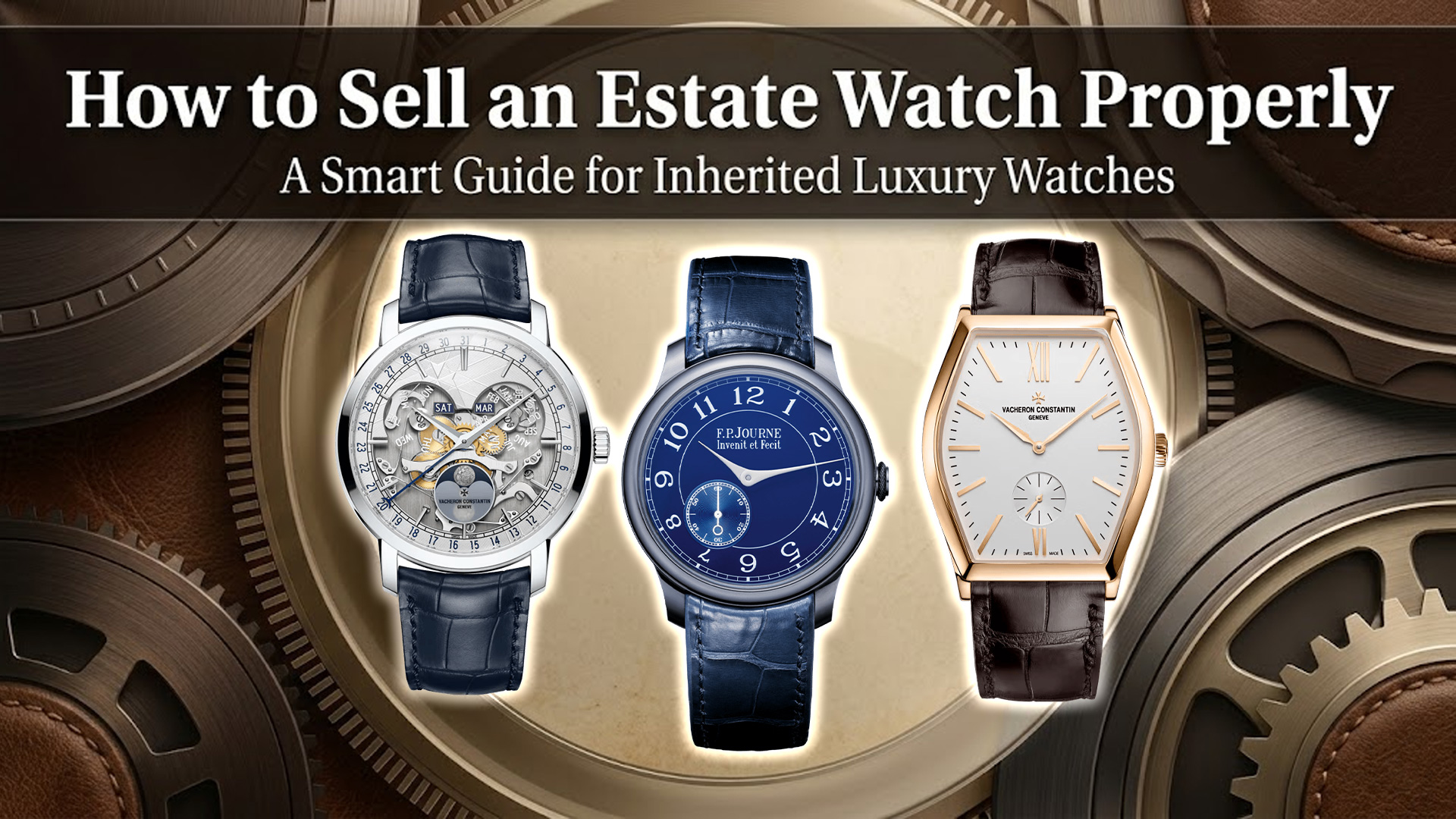
⏳⌚ Inheriting a Luxury Watch Can Feel Emotional and Valuable at the Same Time — The Right Selling Process Protects Both
Inherited luxury watches often carry more than monetary value. They can come with family history, emotional weight, uncertainty, and important financial decisions all at once. That is why learning how to sell an estate watch properly matters so much. An inherited watch should never be treated like an ordinary secondhand item. Whether it is a Rolex, Patek Philippe, Audemars Piguet, Cartier, or another premium piece, the safest and smartest approach is to slow down, identify the watch correctly, organize every document and accessory you can find, and make decisions from clarity rather than emotion.
Many families make the mistake of rushing the process. Sometimes they are trying to settle an estate quickly. Sometimes they assume the watch is worth less than it is. Sometimes they assume it is worth far more than the market would actually support. In both cases, money can be lost because the watch was never handled properly from the start. A strong estate watch sale begins with understanding what you have, who legally has the right to sell it, what condition it is in, and how the market is likely to view it today.
In the pre-owned luxury watches market, inherited pieces can sell very well when they are presented the right way. But they need a more careful process because estate watches often come with missing paperwork, incomplete service history, or uncertainty around originality and family ownership. The more disciplined the process, the stronger the result usually becomes.
Why Inherited Luxury Watches Need a Different Selling Approach
An inherited watch is different from a watch you bought for yourself and decided to sell later. In a personal resale situation, you usually know the story. You know when you bought it, what was serviced, what paperwork you still have, and what kind of wear the watch has seen. With an estate watch, that information is often incomplete. The family may only know that the watch belonged to a parent, grandparent, spouse, or relative. That means the first job is not selling. The first job is understanding.
This matters because buyers do not only want a watch. They want confidence. They want to know the model, the reference number, the approximate age, the condition, the originality, whether the watch comes with box and papers, and whether the person selling it actually has the legal right to do so. An inherited watch may still be highly desirable, but it often needs stronger organization before it can be positioned properly.
The broader pre-owned luxury watches collection on Platinum Times helps show how premium watches are presented inside a more structured marketplace. When you are dealing with an inherited watch, that kind of structured environment matters because it reminds you that the process should feel professional, not improvised.
The First Step: Confirm Who Has the Right to Sell the Watch
Before pricing or listing anything, confirm who actually has authority to sell the watch. In some families, the watch was given directly to one person. In other cases, it is still part of a broader estate. Those are not the same situation. A seller should make sure the watch is being sold by the rightful owner, executor, administrator, or authorized family representative, depending on how the estate is being handled.
This step is often ignored because families assume internal understanding is enough. But when a watch has real value, it is much smarter to be clear from the beginning. A clean ownership story protects everyone. It also makes the eventual sale smoother because the seller can speak with confidence about why they have the right to move the piece.
When legal clarity is missing, hesitation enters the process. And in luxury watch selling, hesitation usually weakens trust.
Identify the Watch Properly Before Discussing Price
One of the biggest mistakes in an estate watch sale is talking about value before identifying the watch correctly. “It is an old Rolex” is not enough. “It is my grandfather’s Patek” is not enough. The model, reference number, metal, size, dial type, bracelet or strap type, and overall watch family all matter.
This is where patience pays off. A watch that looks ordinary to one family may turn out to be a highly desirable reference. On the other hand, a watch with a powerful brand name may be less commercially strong than people assume. Good selling decisions depend on proper identification first.
For comparison context, brand collections such as the Rolex collection, Patek Philippe collection, Cartier collection, and Audemars Piguet collection help show how different luxury watch families are positioned in the market.
Gather Every Piece of Box and Papers You Can Find
With inherited luxury watches, documentation can make a major difference. Search carefully for the original box, warranty card, manuals, extra links, service receipts, purchase receipts, appraisal records, spare straps, travel cases, and even old photographs if they help support the ownership story. You may not find everything, but what you do find matters.
A complete package often improves buyer confidence because it makes the watch feel more traceable and easier to understand. A full set inherited watch can be significantly easier to sell than a watch only example. That does not mean missing paperwork destroys value. It does mean the watch may need more help from condition, model desirability, and pricing discipline.
This is especially important when the watch belongs to brands where provenance and collector confidence matter heavily. If the family has the original card, service documentation, or proof of purchase, that material should be protected and organized before any listing or negotiation begins.
Do Not Clean, Polish, or “Fix” the Watch Too Quickly
Families often assume the watch should be cleaned up before sale. That instinct is understandable, but it can backfire. A light wipe to remove dust is one thing. Aggressive polishing, replacing parts casually, or sending the watch for work without a clear plan is something else entirely.
With many estate watches, originality matters. Buyers often care about whether the case has been heavily polished, whether the dial remains correct, whether the bracelet still feels original to the piece, and whether the watch has avoided unnecessary cosmetic changes. The safer move is usually to document the watch honestly first and make service or restoration decisions only if they clearly support the selling strategy.
That is especially true with stronger legacy brands. A family piece may have more value as a carefully presented original example than as a “refreshed” watch that has lost some of its sharpness or character.
Check the Condition With Honest Eyes
Estate sales become complicated when emotion replaces objectivity. A family may see only memory and meaning. Buyers will see wear, scratches, bracelet looseness, dial quality, service clues, and overall condition. That difference in perspective is why honest assessment matters so much.
Look closely at the case, crystal, crown, bracelet or strap, clasp, dial, and caseback. Ask simple questions. Does the watch still present well? Does it show heavy wear? Does the bracelet feel stretched? Are there missing links? Does the dial appear clean and correct? Has the watch likely been polished before? These details all affect resale value.
A good estate seller does not need to pretend the watch is perfect. They need to describe it clearly. Clear condition reporting protects trust, and trust supports offers.
Understand the Difference Between Emotional Value and Market Value
This is one of the hardest parts of selling an inherited watch. Family value and market value are not the same thing. A watch may mean a great deal emotionally because it belonged to someone important. The market, however, will judge it based on the brand, reference, condition, originality, completeness, and buyer demand.
That does not make the emotional story irrelevant. In fact, a clean ownership story can support trust. But the price still has to reflect the commercial reality of the watch. Families often struggle because they either expect too little and sell too fast, or they expect too much and become frustrated when serious buyers hesitate.
The better mindset is to respect both truths at once. The watch may be meaningful personally and still need to be priced realistically. That balance is what protects good decisions.
Model Examples: Why Estate Watches Vary So Much in Selling Strategy
Not every inherited watch should be handled the same way. A classic dress reference, a modern sports model, and a gem-set piece all create different buyer behavior. That is why it helps to think in model families rather than just brand names.
For example, an inherited Rolex Day-Date may attract buyers who care about prestige, condition, bracelet integrity, and completeness. A family piece like a Rolex Datejust may appeal to a broader everyday luxury buyer. An estate piece such as a Patek Philippe Annual Calendar Moon Phase may bring in a buyer who pays even closer attention to service history, originality, and documentation. A design-led watch such as a Cartier Panthere may depend more on visual presentation and complete packaging.
This is why proper identification matters so much. The selling strategy should match the watch, not the family’s assumptions about it.
Choose the Right Selling Route for an Estate Watch
Once the watch is identified, documented, and understood, the next question is how to sell it. There is no single right answer for every inherited piece.
Some estate watches are good candidates for an outright sale because the family wants a direct payout and a cleaner process. Some deserve a more careful path because the watch is highly desirable and may benefit from stronger buyer-facing presentation. In certain cases, the right solution is not immediate sale at all. The family may first need time to compare options, decide whether someone in the family wants to keep the watch, or determine whether the emotional value is too high to exit it quickly.
The sell or trade luxury watches route is especially relevant for estate pieces because it creates a more structured submission path. That kind of structure is useful when the seller is managing a watch that comes with family significance, incomplete knowledge, or the need for a more organized evaluation process.
Step-by-Step: How to Sell an Inherited Luxury Watch Properly
- Confirm legal selling authority
Make sure the person handling the sale has the right to do so, whether as owner, heir, executor, or authorized representative.
- Identify the exact brand, model, and reference
Do not discuss serious price expectations before knowing exactly what the watch is.
- Gather all available documentation and accessories
Find the box, papers, receipts, manuals, service records, extra links, and anything else tied to the watch’s history.
- Assess condition honestly
Look at wear, originality, bracelet or strap condition, crystal, dial, and case integrity without emotional bias.
- Avoid unnecessary polishing or repairs
Do not rush into cosmetic “improvements” before deciding whether they actually help or hurt the value story.
- Separate emotional value from market value
Respect the family significance, but price according to the actual commercial reality of the watch.
- Choose the route that fits the watch and the family’s goals
Some estate watches should be sold quickly and cleanly. Others deserve more careful positioning.
- Present the ownership story clearly
You do not need drama. You need calm clarity. Buyers respond better to a clean family provenance story than to vague sentiment.
Common Mistakes Families Make With Estate Watch Sales
- Selling too quickly before identifying the watch properly
Fix: Always confirm the model and reference before entertaining real offers. - Assuming emotional value equals market value
Fix: Respect the sentiment, but price from the watch’s actual market position. - Throwing away or ignoring old paperwork
Fix: Search carefully before listing the watch. Documentation can matter more than expected. - Cleaning or polishing the watch too aggressively
Fix: Document first, then decide carefully whether any intervention truly helps. - Using vague family stories instead of clear facts
Fix: Buyers trust specific details more than emotional generalities. - Ignoring condition issues because the watch feels special
Fix: Evaluate the watch like a buyer would, not only like a family member would. - Choosing the wrong selling route out of urgency
Fix: Match the method to the watch’s strength and the family’s real objective.
How to Handle the Emotional Side Without Hurting the Sale
Families often feel conflicted about selling an inherited watch. That is normal. The best way to handle that emotion is not to suppress it, but to separate it from the mechanics of the transaction. One part of the process is personal. Another part is commercial. The more clearly those are separated, the better the decisions usually become.
If the family is uncertain, it may be worth pausing before listing the watch. Ask whether anyone truly wants to keep it. Ask whether the watch has commemorative meaning beyond financial value. Ask whether the family would later regret selling too quickly. Once a clear decision has been made, the sale can move forward much more calmly and much more professionally.
A strong estate sale does not erase the memory attached to the watch. It simply handles the asset properly.
FAQs
Can I sell an inherited luxury watch without the original receipt?
Yes, many estate watches are sold without the original purchase receipt. However, any supporting documents such as warranty cards, service records, old appraisals, or proof of family ownership can still help strengthen buyer confidence.
Do box and papers matter more for an estate watch?
They often matter a great deal because inherited watches sometimes come with less direct ownership knowledge. The more complete the package, the easier it usually becomes for buyers to trust the watch’s story.
Should I service an inherited watch before selling it?
Not automatically. In many cases, it is better to document the watch first and decide carefully whether service or polishing would actually help. Rushing into changes can weaken originality and reduce confidence.
What is the biggest mistake families make when selling an estate watch?
The biggest mistake is usually selling too quickly before confirming the exact watch details, legal ownership position, condition, and documentation.
Can a family watch still have strong value if it is watch only?
Yes. A strong watch can still sell well without a full package, especially if the model is desirable and the condition is attractive. But pricing and presentation usually need to be more disciplined.
Does emotional family history increase the market value?
Usually not by itself. Emotional history may matter personally, and a clean provenance story can support trust, but the market still prices the watch mainly through brand, model, condition, originality, and completeness.
Is a Rolex Day-Date inherited from family easier to sell than other watches?
Not automatically, but strong, recognizable models like a Rolex Day-Date often attract clear buyer interest when the watch is well presented and documented properly.
What is the safest way to begin an estate watch sale?
Start by confirming who has authority to sell, identifying the watch correctly, and organizing every document and accessory you can find before discussing serious offers.
Final Thoughts
Inherited luxury watches: how to sell an estate watch properly comes down to patience, clarity, and respect for both the watch and the family story behind it. The best results usually come when the legal right to sell is clear, the watch is properly identified, the box and papers are gathered, the condition is described honestly, and the pricing reflects real market value rather than guesswork or emotion.
For sellers comparing the best internal next steps, the strongest routes are the broader pre-owned luxury watches collection, the structured sell or trade luxury watches page, and brand-led paths such as the Rolex collection, Patek Philippe collection, Cartier collection, and Audemars Piguet collection. For model-level context, the Rolex Day-Date, Rolex Datejust, Patek Philippe Annual Calendar Moon Phase, and Cartier Panthere are all natural examples of how very different inherited watches may require very different selling strategies.
Ready to transition your family heirloom with confidence? Start your professional evaluation with Platinum Times today.
Leave a Reply