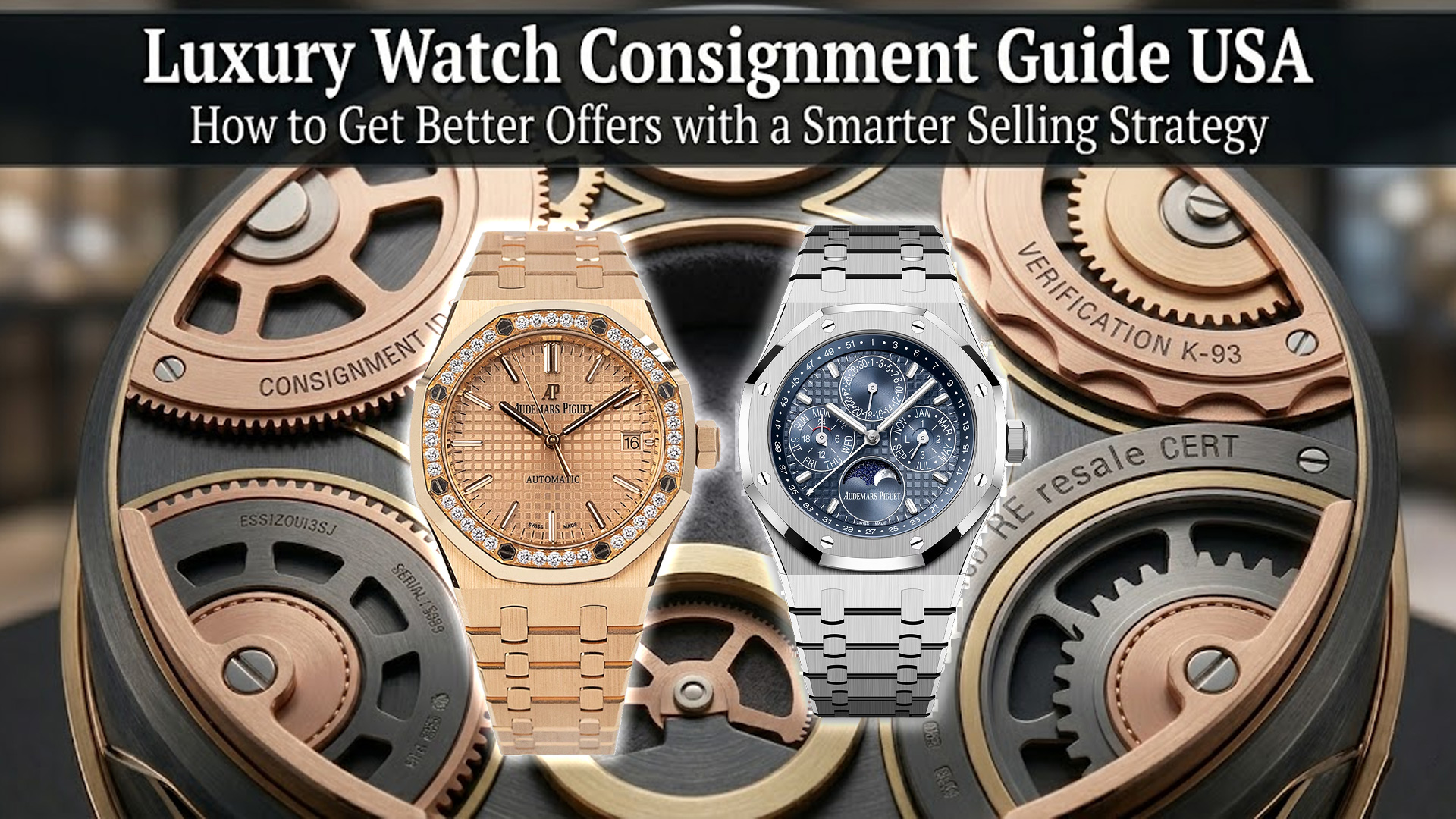
U/💼⌚ Thinking About Consignment? For Many Luxury Watch Owners, It Can Be the Difference Between a Quick Low Offer and a Stronger Final Result
A strong luxury watch consignment guide in the USA should answer one core question clearly: when is watch consignment actually the better move than selling outright? For many owners, the answer comes down to one simple reality. If the watch deserves a more premium selling environment, better presentation, stronger buyer trust, and a more patient pricing strategy, consignment can often produce a better outcome than taking the first direct offer that appears.
In the pre-owned luxury watches market, not every seller wants the same thing. Some want immediate liquidity. Some want the highest realistic return. Some want a safer, more structured process handled by professionals who already understand buyer behavior, model demand, pricing psychology, and high-value transactions. That is where luxury watch consignment becomes especially relevant. It gives sellers a more strategic route when the watch has strong market appeal but the owner does not want to handle every inquiry, negotiation, photo, and transaction detail alone.
The key is understanding that watch consignment in the USA is not just “handing over a watch and waiting.” A strong consignment process should involve realistic pricing, brand and model positioning, presentation quality, buyer qualification, secure transaction handling, and clear payout terms. When those pieces are in place, consignment can be one of the smartest selling methods available for owners of brands such as Rolex, Patek Philippe, Audemars Piguet, Richard Mille, Cartier, and Hublot.
For sellers who own a desirable watch but do not want to accept a rushed buyout number, this route often deserves serious consideration. The cleaner the consignment process, the more likely it is to protect both value and peace of mind.
What Luxury Watch Consignment Really Means
Luxury watch consignment means placing your watch with a professional seller or established platform that markets and sells the watch on your behalf. Instead of buying the watch from you immediately, the consignee helps position it to the market, handles presentation and buyer interaction, and pays you according to the agreed terms once the watch sells.
This is different from an outright purchase. In an outright sale, you trade speed for simplicity. The buyer purchases the watch directly and assumes the resale effort and market risk. In consignment, the watch remains part of a structured selling arrangement, which often gives the seller a chance at a stronger final number because the watch is marketed more intentionally.
That difference matters. A great watch can still receive a conservative direct offer simply because the buyer must leave enough room for margin, inventory time, risk, and overhead. With consignment, the goal is often to reach the end buyer more effectively instead of closing the deal at the wholesale-style level.
For sellers browsing current market positioning, it helps to explore the broader pre-owned luxury watches section and the structured sell or trade luxury watches route, both of which align naturally with how higher-end watch selling is approached on the site.
When Consignment Makes More Sense Than an Outright Sale
Not every watch should be consigned. In some cases, a direct sale is the better move. But watch consignment in the USA often makes the most sense when a seller falls into one or more of the following situations.
You want more value than a quick offer provides
This is the most common reason. Many owners realize their watch deserves stronger positioning than an instant buyout offer allows. If the watch is attractive, well documented, and brand-relevant, consignment may help it reach a buyer willing to pay closer to true retail-market expectations.
You own a model that benefits from premium presentation
Some watches sell better when photographed, described, and marketed professionally. That is especially true with highly recognizable models or references where buyers compare details carefully. A Rolex GMT-Master II Batman, a Patek Philippe Nautilus, an Audemars Piguet Royal Oak, or a Richard Mille RM010 often lives in a segment where presentation quality materially affects perceived value.
You do not want to manage private-sale risk
Private selling can bring higher upside, but it also brings more work and more risk. Sellers may need to handle pricing, messaging, verification questions, payment concerns, shipping, meeting arrangements, and post-sale tension. Luxury watch consignment can reduce that burden by moving the watch through a more controlled, professional channel.
You want a more discreet process
Some sellers prefer not to advertise a valuable watch personally or manage multiple unknown inquiries. A strong consignment partner can help maintain a more professional and filtered process, which is especially useful when the watch is high value or the owner prefers privacy.
Your watch is desirable, but not urgent to liquidate
If you need cash immediately, consignment may not be the best route. But if you can wait for the right buyer, consignment often becomes more attractive because time can be exchanged for better positioning and, in many cases, stronger pricing.
Step-by-Step: How Watch Consignment in the USA Works
- Start with accurate watch information
Before a watch can be consigned properly, the basics need to be clear. The brand, model, reference number, condition, year if known, service history, and accessories all matter. A serious consignee cannot price or present the watch intelligently without understanding exactly what it is.
This first step sounds simple, but it shapes the entire process. An accurately identified watch is easier to position, easier to compare, and easier to explain to potential buyers.
- Gather all available box and papers
Documentation strengthens the story around the watch. Original box, warranty card, manuals, service receipts, extra links, tags, and proof of purchase can all help. In many parts of the pre-owned luxury watches market, a full set creates stronger buyer confidence than a watch only example.
That does not mean a watch without papers cannot perform well on consignment. It absolutely can. But the pricing, presentation, and buyer expectations need to reflect that reality honestly.
- Review condition with discipline
A consignment partner can only market the watch properly if the condition is described clearly. Scratches, polishing history, bracelet wear, strap fatigue, clasp marks, crystal condition, and other visible details should be acknowledged early. Premium buyers are usually not scared by honest wear. They are scared by surprises.
That is why professional clarity matters. A well-described watch builds confidence. An over-described watch creates doubt.
- Agree on a realistic pricing strategy
This is one of the most important parts of the entire process. Good watch consignment depends on realistic pricing. If the agreed listing number is too high, the watch can sit for too long and lose momentum. If it is too low, the seller gives away upside that consignment was supposed to protect.
The best pricing strategy usually comes from real comparables, current demand, brand strength, completeness, and condition. A properly priced watch attracts better conversations faster.
- Clarify the consignment terms before handing over the watch
Serious sellers should understand the structure before the watch enters the selling channel. That means knowing how pricing is handled, how the watch will be marketed, what happens if it does not sell, whether the consignee can negotiate within a range, and how payout timing works after a completed sale.
This does not need to feel complicated, but it does need to feel clear. Ambiguity at the start often becomes frustration later.
- Let the watch be marketed professionally
Once consigned, the watch should be photographed, described, and positioned properly. This is where the real value of luxury watch consignment in the USA often shows up. A professionally handled listing can reach more relevant buyers and make the watch feel easier to trust.
That is especially important when the watch belongs to a highly recognized family such as the Rolex collection, Patek Philippe collection, Audemars Piguet collection, or Richard Mille collection.
- Buyer screening and transaction handling should stay professional
A big part of consignment value is that the seller does not need to manage every message, low offer, and uncertainty alone. A good process filters the buyer journey. That means serious inquiries get attention, weak inquiries waste less of the seller’s time, and the transaction can move forward with more control.
For many owners, this is one of the biggest advantages of the consignment route. It turns a stressful, exposed process into a more structured and professional one.
- Final sale and payout should happen under clearly understood terms
Once the watch sells, payout should follow the previously agreed structure. This is why upfront clarity matters so much. A strong consignment experience feels clean because expectations were aligned from the beginning.
Which Watches Usually Perform Well on Consignment
In general, watch consignment tends to work best when the watch has clear market demand, strong brand recognition, attractive condition, and enough value that professional presentation can materially improve the outcome.
Some of the most natural candidates include:
- Rolex sports and dress models with strong buyer familiarity
- Patek Philippe models that attract collector-level scrutiny
- Audemars Piguet references where condition and finishing matter heavily
- Richard Mille pieces that require extra buyer confidence and professional handling
- Cartier references that benefit from premium presentation and brand-led trust
- Hublot models where visual appeal and exact positioning influence buyer response
For practical market context, live examples such as the Rolex Datejust, Rolex Day-Date, Patek Philippe Nautilus, Audemars Piguet Royal Oak, and Richard Mille RM010 show the kind of premium positioning that makes consignment especially relevant for certain sellers.
That does not mean only ultra-high-end pieces belong in consignment. It means watches that gain value from better presentation, stronger buyer trust, and more patient pricing usually fit the route more naturally.
How Fees, Pricing, and Payout Expectations Should Be Handled
This is the part sellers should understand clearly before moving forward. Luxury watch consignment is not just about the final sale number. It is about the net result after the agreed structure is applied. That means sellers should think in terms of the actual outcome, not just the headline listing price.
A smart seller usually asks:
- How will the watch be priced initially?
- Can the seller approve price adjustments?
- How is the final payout calculated?
- What happens if the watch does not sell within a reasonable timeframe?
- What happens if the seller wants the watch returned?
- How long after a completed sale is payout issued?
Even when terms are simple, they should still feel clearly understood. The best consignment arrangements are the ones that feel transparent from the beginning. When the structure is clean, the seller can focus on outcome rather than uncertainty.
It also helps to think realistically about pricing patience. If the watch is priced too aggressively, time in market can start working against it. If it is priced sensibly, consignment can create a better balance between value protection and actual conversion.
Mistakes to Avoid
- Using consignment when speed is the only priority
Fix: If immediate liquidity matters most, an outright sale may fit better than consignment. - Agreeing to vague terms
Fix: Understand pricing, negotiation range, payout structure, and return terms before handing over the watch. - Overpricing the watch from the start
Fix: Use real market comparisons and let current demand shape the strategy. - Ignoring the importance of box and papers
Fix: Gather everything available and let completeness support the presentation. - Choosing the wrong consignment partner
Fix: Work with a route that feels professional, organized, and aligned with premium watch selling. - Assuming every watch should be consigned
Fix: Some watches are better suited for direct sale, especially if urgency matters more than maximizing return. - Hiding condition issues
Fix: Honest condition reporting protects trust and makes the consignment process smoother.
Recommended Internal Resources
- Platinum Times USA – useful for broader brand and platform context.
- Pre-owned luxury watches – useful for seeing how premium inventory is positioned across major brands.
- Sell or trade luxury watches – the most relevant internal path for structured seller submission.
- Rolex collection – useful for category-level comparison in a high-demand segment.
- Patek Philippe collection – useful for higher-end collector context.
- Audemars Piguet collection – useful for model-level comparison in a premium sports-luxury segment.
- Richard Mille collection – useful for ultra-luxury market context.
FAQs
What is luxury watch consignment in the USA?
It is a selling arrangement where a professional platform or dealer markets and sells the watch on your behalf, then pays you according to the agreed terms after the watch is sold.
Is consignment better than selling outright?
It depends on your goal. If you want immediate liquidity, an outright sale may be better. If you want stronger upside and can wait for the right buyer, consignment often makes more sense.
Which brands usually do well on watch consignment?
Strong-performing consignment brands often include Rolex, Patek Philippe, Audemars Piguet, Richard Mille, Cartier, and Hublot, especially when the watch is well presented and correctly priced.
Do box and papers matter in consignment?
Yes, they often matter a great deal. They improve buyer confidence, support provenance, and can help justify stronger pricing.
Can I consign a watch without original papers?
Yes, many watches are consigned without a complete set. The key is honest disclosure, realistic pricing, and a presentation strategy that reduces doubt.
How long does a luxury watch consignment sale usually take?
There is no single timeline. The speed depends on brand demand, model desirability, pricing accuracy, condition, completeness, and current market appetite.
What kinds of watches are best for consignment?
Watches that benefit from premium presentation, broader buyer exposure, and patient pricing often fit consignment best. Highly recognizable or higher-value models are common examples.
Is watch consignment in the USA safer than a private sale?
For many sellers, yes. A structured consignment process can reduce the burden of buyer screening, negotiation handling, and transaction coordination compared with a fully private sale.
Final Thoughts
A good luxury watch consignment guide in the USA should leave you with one clear takeaway: consignment is usually the smarter path when the watch deserves better presentation, stronger buyer trust, and more patient pricing than a quick direct offer can provide. It is not the fastest route in every case, but it can be the better route when value preservation matters more than speed alone.
For sellers who want a more professional process, the strongest internal next steps are the broad pre-owned luxury watches collection, the structured sell or trade luxury watches page, and brand-relevant category routes such as the Rolex collection, Patek Philippe collection, Audemars Piguet collection, and Richard Mille collection. For model-level comparison, currently relevant live examples include the Rolex GMT-Master II Batman, Patek Philippe Nautilus, Audemars Piguet Royal Oak, and Richard Mille RM010, all of which naturally reinforce the kinds of watches that often benefit from a stronger consignment strategy.
Ready to Maximize the Value of Your Timepiece?
Navigating the luxury market requires a professional strategy. Skip the low offers and let our experts position your watch for the strongest final result.
START YOUR CONSIGNMENT EVALUATION
Transparent terms. Professional presentation. Secure transactions.
Leave a Reply